
This issue of 5RW is sponsored by: ThePlaybookx.com
As New and Emerging Leaders, our problem isn’t a lack of ideas. It’s finding the TIME, SPACE, and CONFIDENCE to bring them to life. Discover practical tools and frameworks to Think Smarter. Move Faster. Lead with Confidence.
Thanks for reading 5 Reasons Why...! Subscribe for free to receive new posts and support my work.
Sponsor this newsletter to reach 5,000+ active readers
(info@creativeldrs.com)

TL;DR:
- There’s no “right” move → Life is probabilistic, not deterministic. Perfect information doesn’t exist. The only rational move is to stack odds based on what you know now.
- Binary is a trap → We confuse deciding with prioritizing, judge decisions by outcomes, not process, and seek certainty where none exists.
- The cost of chasing “right” → You freeze, spin, and hedge. Projects stall. You never fully commit or learn.
- 10 of a kind → List 10 things you know, 10 you don’t. Anxiety shrinks when unknowns are on paper. Decide from what you actually know.
- From “right” to “best given what we know” → Externalize uncertainty. Clarify your foundation. Pause, ponder, pivot.
♦️ Life is Poker, Not Chess…
On a random Friday night, Slim changed the way I think about decisions.
I was having a drink with one of my oldest friends—a sports journalist and pro-poker commentator (and player). I’d been struggling with a couple of tough decisions for my studio. Stuck. Spinning.
He looked at me with his usual chill and swag.
“Life is poker, G. Not chess.”
Here are 5RW… ♠️ Life is Poker, Not Chess
I — There’s NO “Right” Move
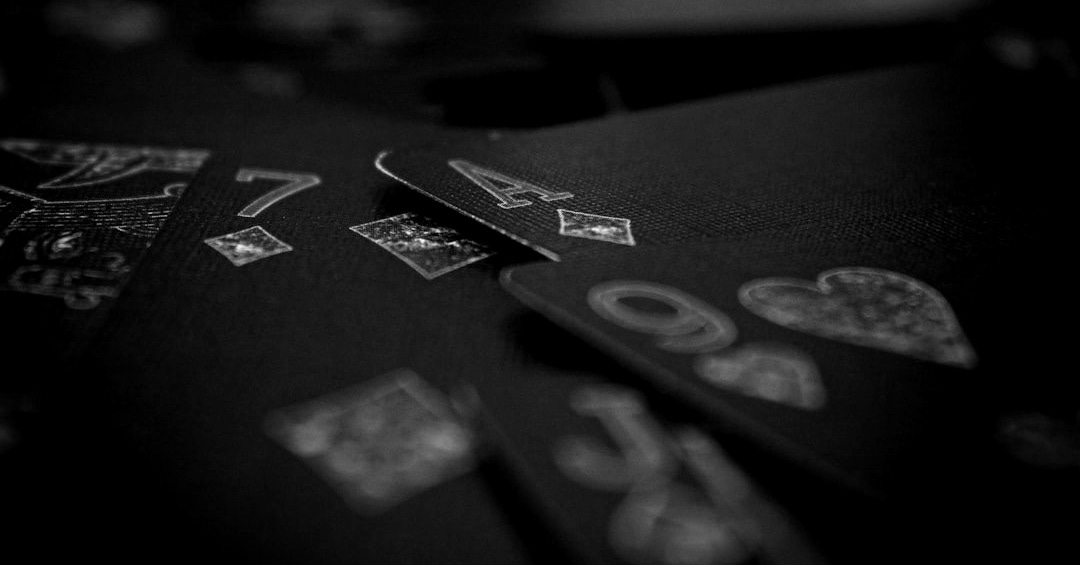
WTF do you mean, Dawg? I asked.You see G. In chess, perfect information leads to perfect moves.
But in poker, even a perfect play can lose. The cards are hidden. The outcomes are uncertain. And the only rational move is to stack the odds in your favor based on what you know now—not what you wish you knew.
Most people live as if life is deterministic—same inputs, same outputs. But it’s not.
Life is probabilistic—multiple outcomes. Constant uncertainty.
We were trained in binary terms: right or wrong, success or failure.
But in the real world, outcomes are rarely binary.
He introduced me to the work of Annie Duke, another professional poker player. From whom he got his quote.
II — Binary thinking is the trap
Photo by Nicolas Picard on Unsplash

That conversation stuck with me. I started researching and realized most of my indecision came from three traps:
Binary Thinking. There’s no such thing as a “right” decision. Black-or-white thinking traps us into seeking perfect certainty where none exists.
Confusing Deciding with Prioritizing. Deciding (from Latin decidere—to cut off) means eliminating options, prioritizing means ordering them. We confuse them constantly.
Resulting Bias. We judge decisions by their outcomes, not by the process. Imagine betting your savings on red at roulette. Win, you’re “brave.” Lose, you’re “reckless.” The odds were identical. The quality of a decision is determined by the rigor of the process—not the result.
III — The cost of chasing “right”
When you keep searching for “the right answer” in a world of uncertainty, here’s what happens:
You freeze—projects stall. Momentum dies. You’re searching for certainty that doesn’t exist.
You spin. You keep analyzing instead of learning—motion without progress.
You hedge. Even when you move, you never fully commit—so you never fully learn.
IV— The 10+10 Play
Photo by Michał Lis on Unsplash
Here’s the shift: Stop looking for the right answer. Start clarifying what you actually know.
The 10+10 Play
Next time you feel stuck, try this.
Grab a piece of paper and draw a line down the middle.
Left side: 10 Things You Know for Sure. What do you actually know for certain about this decision? Facts, not assumptions. Data, not hopes. List ten things—even if some feel obvious. Force yourself to get to ten.
Right side: 10 Things You Don’t Know. What are you uncertain about? What’s missing? What are you assuming but haven’t verified? Again, force yourself to ten.
Now look at both columns.
Here’s what happens: Most of your anxiety lives in the right column—the unknowns. But when you see them written down, they shrink. Some you can research. Some you can test. Some you might realize don’t actually matter.
And the left column? That’s your foundation. That’s what you’re actually deciding from.
Try this tomorrow: Take one decision you’ve been avoiding. Give yourself 10 minutes. Fill both columns. Then ask: What’s the best move given what I know—and what’s the riskiest thing I don’t know?
‼️ As a New leader, you will be overwhelmed with decisions.Here are 5 PLAYS (practices) to make Better, Sharper, Faster Decisions.
V — 5. From “right” to “best”
When we stop chasing certainty and start navigating probability, everything shifts.
When you change your approach and start to see what you know and what you don’t, an unbelievable clarity sets in.
Anxiety drops because you’ve externalized the uncertainty—it’s on paper, not spinning in your head.
Speed increases because you’ve clarified what you’re actually deciding from.
Adaptability grows because you’ve already identified what to watch for and when to pivot.
It’s never a bad decision if you can pause, ponder, and pivot.
PS: If you are up to the challenge, join our community and post your 10+10, or email them to info@creativeldrs.com
Here are 5RW… ♠️ Life is Poker, Not Chess
Something I wish I had
If, you are struggling with decision-making. Especially under uncertainty. Here are five Plays I use to help me in the decision-making process. 10 minutes each. I share them with all the teams I work with.